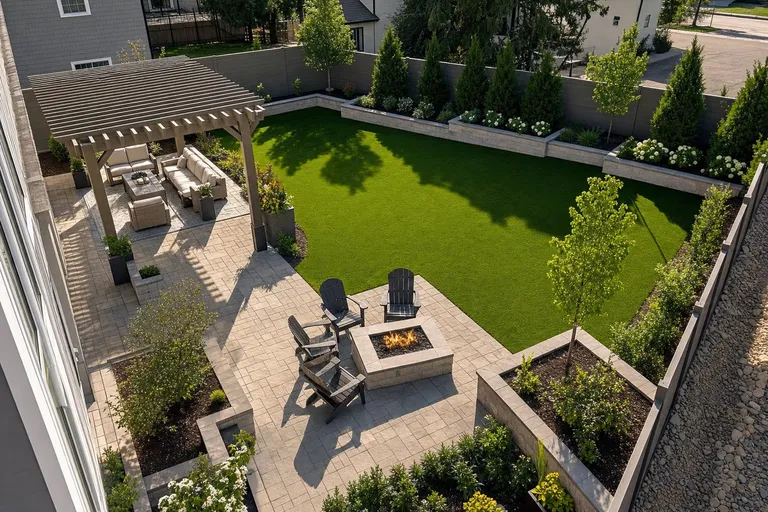
Summary: Tulsa's clay soil drains slowly and Oklahoma storms hit hard, so turf laid on bare dirt traps water and causes puddles, odor, and weeds. A graded, compacted, permeable base gives storm water a path down and away, keeping the surface firm and usable in minutes. That foundation is what separates lasting turf from turf that fails, and T-Town Turf engineers it for Tulsa.
The short answer
Drainage is the single most important part of any turf install in Tulsa, because Oklahoma combines heavy storms with slow-draining clay soil. Lay turf straight on that clay and water gets trapped underneath, leading to puddles, soft spots, odor, and weeds. Build a graded, permeable base first and the same yard sheds a downpour in minutes. That base is what separates turf that lasts from turf that fails, and it is exactly what T-Town Turf engineers for Tulsa conditions.
The core idea: in Tulsa, the clay does not drain, so the base has to. A properly built permeable foundation gives storm water a path down and away instead of trapping it under the turf.
Why Tulsa clay makes drainage hard
Green Country sits on dense, clay-heavy soil that holds water and drains slowly. When a fast-moving Oklahoma thunderstorm dumps an inch or more in a short window, that water has nowhere to go quickly. On a natural lawn it pools in low spots; under improperly installed turf it gets trapped against the backing. The result is standing water, a spongy surface, and the trapped moisture that causes odor and mildew over time. Solving this is not about the turf you choose, it is about what you build underneath it.
Bare clay vs an engineered base, after a storm
The comparison below shows what actually happens after a heavy Tulsa rain when turf is laid on bare clay versus on a properly graded, permeable base.
| After a Tulsa storm | Turf on bare clay (DIY) | T-Town Turf engineered base |
|---|---|---|
| Where water goes | Sits on slow clay | Drains down and away |
| Surface after rain | Puddles and soft spots | Firm and usable in minutes |
| Odor and mildew | Trapped moisture, smell | Dries fast, stays fresh |
| Weeds through seams | Push up where barrier is skipped | Blocked by barrier |
| Long-term shape | Ripples and settles | Stays flat and stable |
Every failure in the left column traces back to skipping base prep, which is why drainage problems are so common on DIY jobs. We break down those failure points in our guide on DIY vs professional turf installation in Tulsa.
Estimate savings, value, and quality of life before you plan.
Use T-Town Turf's calculator to compare lawn upkeep costs, turf plus outdoor amenity value, and the time a cleaner, lower-maintenance Tulsa property could give back.
How a proper drainage base is built
A turf system that drains starts well below the blades. T-Town Turf removes the existing grass, grades the subgrade to a deliberate slope so water moves away from the house, then builds and compacts a permeable base that carries the load while letting water pass through. A weed barrier goes in, and the turf is laid with a perforated backing and infill chosen to keep water moving. You can see every layer explained in our guide on what goes under artificial turf in Tulsa. The order and the compaction are what make it work; miss a step and the system traps water instead of shedding it.
Drainage protects more than the lawn
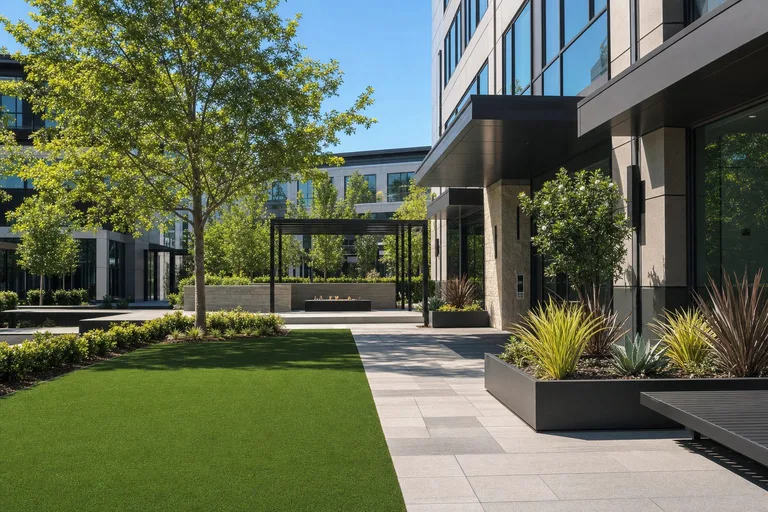
Good drainage is what keeps the whole backyard usable. It means no puddles around the patio, no soft spots where the dog runs, no mud tracked onto decks, and a putting green or play area that is firm again within minutes of a storm. For pet owners it is essential, since trapped moisture is the main source of odor. And because Tulsa swings from summer drought to winter freeze-thaw, a base that drains keeps performing across every season instead of breaking down after the first wet winter.
Why professional drainage is worth it
Drainage is the part of a turf job that is invisible when it is done right and obvious when it is done wrong. By the time puddles and odor show up, the only real fix is to pull the turf and rebuild the base, which costs far more than doing it correctly the first time. T-Town Turf grades and builds the foundation for Tulsa's clay and storms on every install, residential or commercial, so the lawn drains, stays firm, and lasts.
The T-Town Turf approach
Turf that drains in Tulsa is built from the subgrade up for clay soil and heavy storms. As a locally owned Tulsa company, T-Town Turf engineers the drainage on every install, then walks the finished project with you. Here is how a typical install comes together:
- 1
Free on-site assessment
We study your soil, slope, low spots, and how storm water moves across the property, then plan drainage around it.
- 2
Custom plan and transparent quote
You get a clear scope and price with no surprises. We also know most common HOA expectations and can help you navigate the questions to ask, though final approval always depends on your specific HOA.
- 3
Grading the subgrade
We strip the old grass and shape the soil to a deliberate slope so water runs away from the house and patios.
- 4
Permeable base and barrier
We build and compact a free-draining base and add a weed barrier, the layers that carry the load and move water down and out.
- 5
Turf, infill, and final walkthrough
We lay perforated turf, brush in drainage-friendly infill, then inspect the drainage and seams with you so you know it sheds Oklahoma storms.
Want turf that drains instead of puddles? See T-Town Turf's turf services or reach out to our local team for a free, no-pressure assessment.